
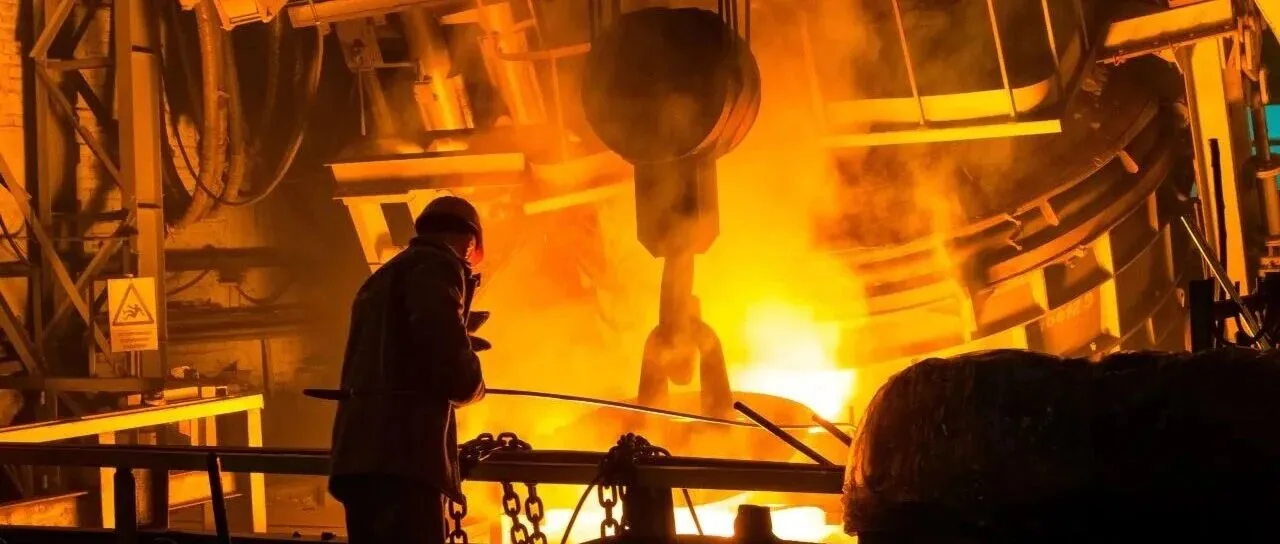
Domex-E is working with Baowu Clean Energy on energy-efficiency upgrades for air-separation compressors. Hubei Ezhou Steel already has measured results from a unit in operation. Chongqing Chaoyang Gas is taking the same path on its own plants. The savings from a high-efficiency compressor are turning from one project into a replacement approach that other plants can check against.
At a large steel works, the air separation unit supplies the oxygen and nitrogen the plant uses. The efficiency of the main air compressor goes straight into the unit's power bill. Once a machine has run for many years and its performance has fallen off, the gap versus a current high-efficiency compressor is the room a retrofit can recover.
Ezhou Steel: measured after startup
Whether a retrofit is worth doing is answered by how the machine runs after it is in service.
At Hubei Ezhou Steel, the Siemens Energy air compressor Domex-E supplied earlier for a 40,000 Nm³/h air separation unit went into operation at the end of 2022. In production, its operating parameters beat the targets set at the time, and both efficiency and stability held up under site conditions.
The same site still had a 35,000 Nm³/h air separation unit on a domestic-brand air compressor that had run for about 15 years. As the machine aged, power use rose. In hot summer weather the air flow was short, and oxygen output was limited.
The difference between the two trains made the case for replacement concrete. Ezhou Steel decided to replace the main air compressor on the 35,000 Nm³/h unit, and again chose the Siemens Energy compressor solution supplied by Domex-E.
The new machine went into operation in October 2025. Against the previous compressor, measured energy use is about 16% lower, equal to 19.68 million kWh a year and about RMB 21.09 million in electricity cost. The replacement also closed the summer air-supply gap left by worn parts such as the old impellers. In hot weather, oxygen output is about 3,000 Nm³/h higher than a year earlier. These are measured results for this main air compressor after the replacement.
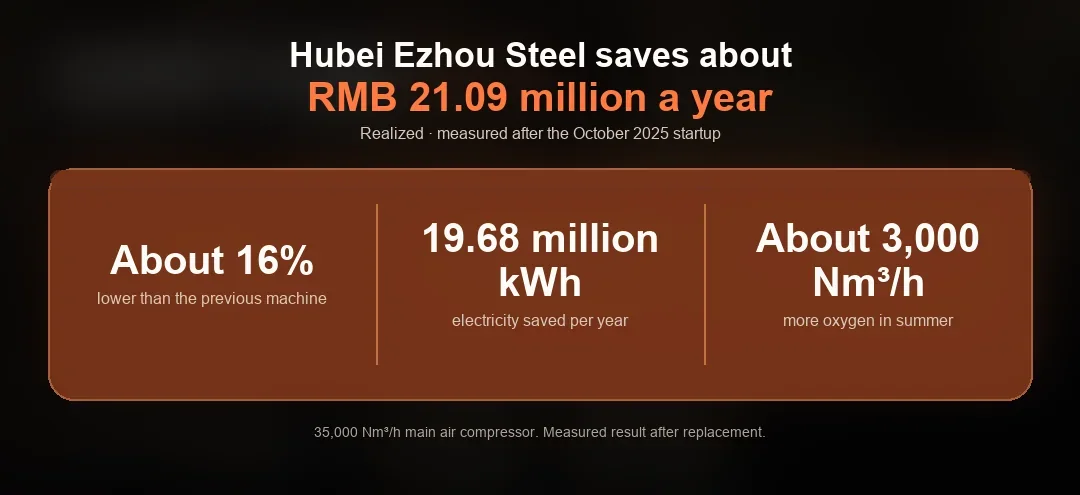
The gain is not only a lower power bill. Oxygen output and summer air supply both improved, so the unit can run at a higher production rate.
From years of operation on the 40,000 Nm³/h unit to the main air compressor replacement on the 35,000 Nm³/h unit, Ezhou Steel is a case other plants can check: on an air separation unit already in service, replacing the compressor with a high-efficiency machine shows up in both electricity cost and output.
Chaoyang Gas: the next plant on the same path
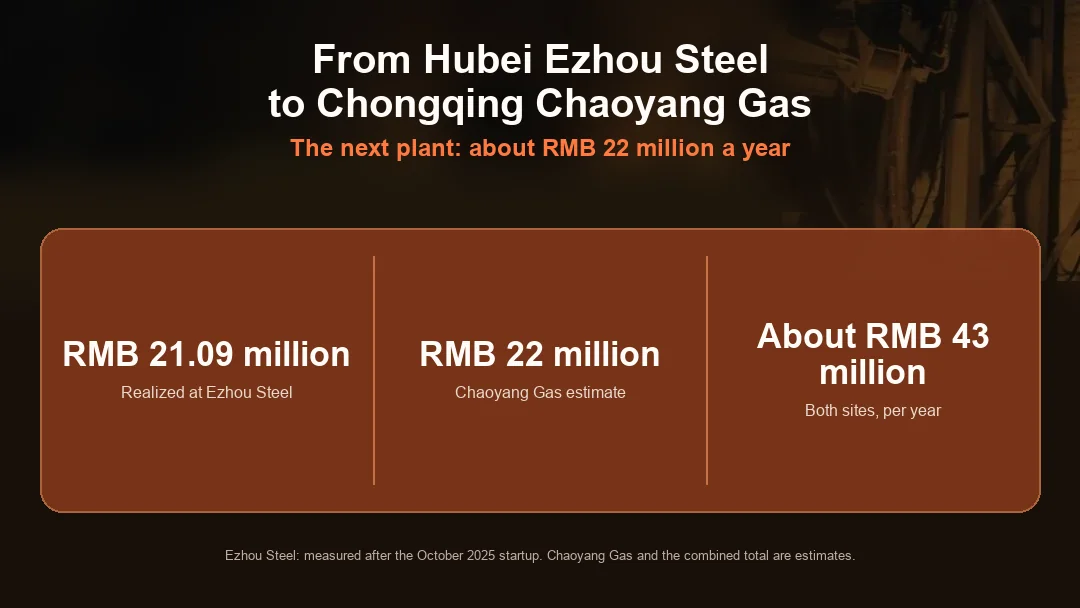
Once the Ezhou Steel results were in, Domex-E's work with Baowu Clean Energy extended to the air-separation upgrade at Chongqing Chaoyang Gas.
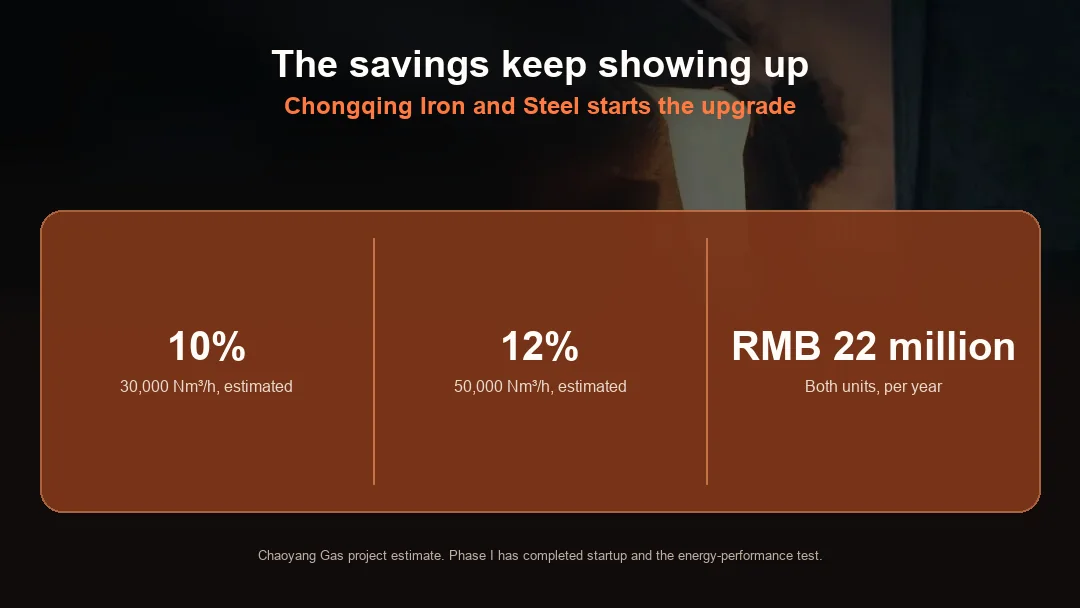
The air compressors on Chaoyang Gas's 30,000 Nm³/h and 50,000 Nm³/h units were domestic-brand machines. Their actual specific power was higher than the energy use stated in the original contract. On an air separation unit that runs continuously, a difference of a few percent becomes a large electricity bill over a year, and room to lower the long-term operating cost.
Domex-E offered a Siemens Energy high-efficiency compressor replacement for both units. On the project estimate, overall energy use is expected to fall by 10% and 12%. That corresponds to about RMB 10 million and RMB 12 million a year, or about RMB 22 million combined. These are expected figures after the retrofit, not electricity cost already realized.
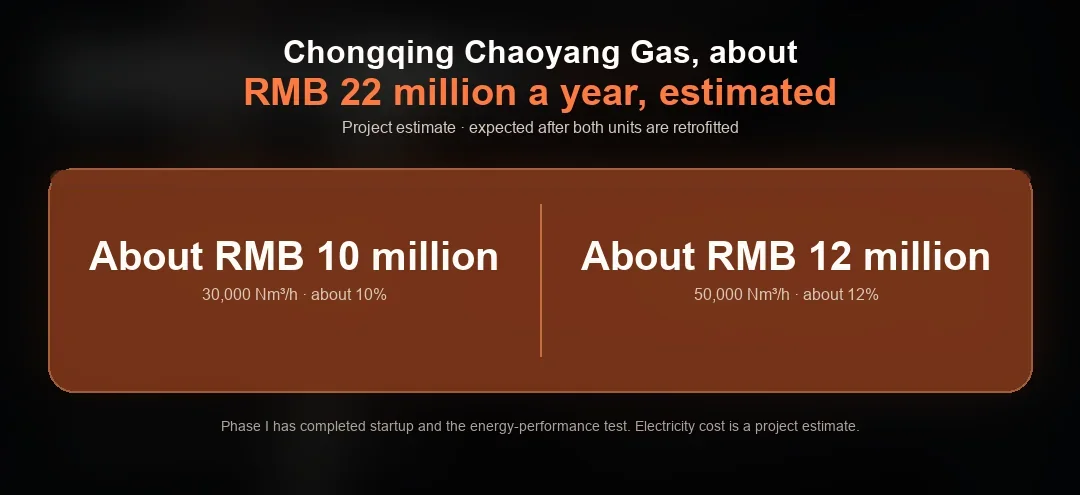
On a large air separation unit that runs continuously, buying the machine is only part of the investment. Power consumption over the years decides the operating cost. A more efficient main air compressor keeps lowering energy use per unit of product while the plant keeps its output.
Replacement also has to fit the plant that is already there
Unlike a new plant, a retrofit on an operating air separation unit has to fit a building, foundation, piping and auxiliary systems that are already fixed. The new machine has to be more efficient and still line up with the existing process. Space, the interfaces between old and new equipment, and how to keep production going during the work are all site problems.
At Chongqing Chaoyang Gas, Domex-E designed the machine layout, equipment interfaces and auxiliary systems around the site and the existing installation, covering the energy target and the constraints of the building and the equipment kept in place.
Phase I of the energy upgrade at Chongqing Iron and Steel has completed startup and passed performance and energy-efficiency tests, with the technical results at the expected level. The annual electricity-cost figures remain a project estimate.
This kind of retrofit is not finished when the old machine is swapped for a new one. Selection, system design, installation and performance testing have to be done together before a savings target on paper becomes a result in production.
Savings have to keep showing up in operation
From the measured results at Ezhou Steel to the upgrade at Chaoyang Gas, Domex-E is putting high-efficiency compressors onto industrial plants that are already running. For the user, the retrofit changes long-term power use, and air supply at high load and in hot weather.
Upgrading equipment already on site will remain one way for plants to get more out of assets they already own. Domex-E will keep using Siemens Energy compressor technology, system engineering and local service to shape retrofit solutions around how a plant actually runs, and will keep using digital monitoring, diagnostics and operating optimization to look for further savings in operation.
Delivering the machine is the starting point. The work after that is to keep bringing the power use of these units down while they run.
First published in Chinese on the Domex-E WeChat official account (10 November 2026). Read the original