
As artificial intelligence moves onto the plant floor, turning large volumes of operating data into judgments that truly matter has become a central question for industrial intelligence.
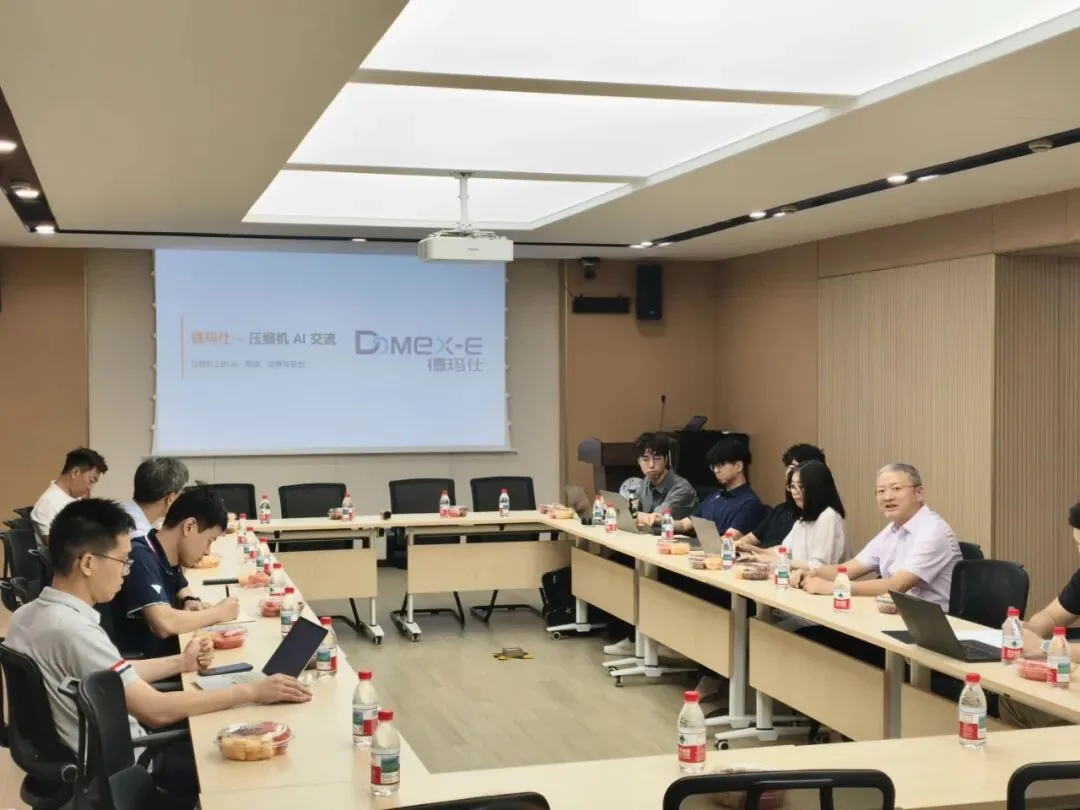
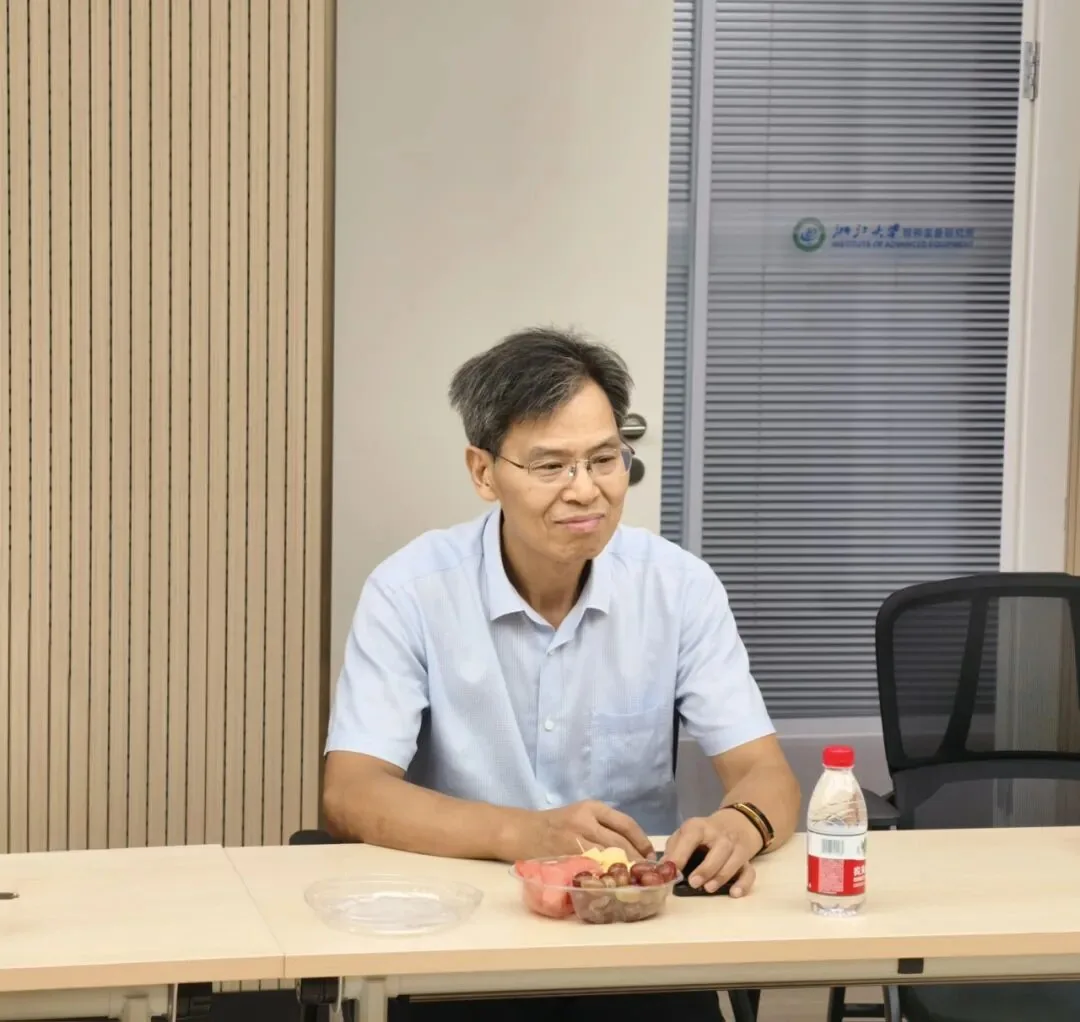
On 24 September 2026, the Domex-E team visited Zhejiang University for an in-depth exchange with experts in the field on AI-based O&M for compressors and other rotating equipment. The discussion covered intelligent fault diagnosis, equipment health assessment, combining physical mechanisms with AI models, predictive maintenance and system-level operating optimization, drawing on real application cases and current research to explore the technical challenges and future of industrial AI.
From data monitoring to intelligent judgment
As industrial plants grow larger and run more continuously, the stability and efficiency of critical equipment such as compressors directly affect the safety and economics of the whole production system.
Industrial digitalization now lets operating parameters such as temperature, pressure, flow and vibration be collected and monitored in real time. But having data is not the same as understanding the equipment. Conventional monitoring relies mostly on threshold alarms and operator experience; when conditions are complex and anomalies span several measurement points, identifying the problem, finding the cause and deciding what to do remain major challenges on site.
To meet this need, Domex-E has kept developing and applying digital O&M technology. From remote monitoring in 2019, to equipment health and energy analysis in 2022, to the introduction of AI in 2025, the Domex-E digital platform has evolved from data acquisition and condition assessment to intelligent analysis.
During the exchange, Domex-E presented and demonstrated Domex-Engine, the AI O&M platform for compressors that it developed in-house.
The platform links process parameters, high-frequency vibration signals, design data and historical operating records, and assesses equipment condition by combining engineering calculations with analysis by an AI agent.
In the live demonstration, Domex-E showed how the platform identifies intercooling anomalies and analyzes vibration signals, then uses equipment load, historical trends and engineering knowledge to narrow down likely causes and suggest what to check.
For example, when analyzing the intercooling system, the platform does not just check whether temperatures exceed preset limits; it also takes cooling-water flow, heat-exchange condition and operating conditions into account to identify changes in cooling performance, providing a reference for maintenance and energy optimization.
Moving from detecting an anomaly to understanding what lies behind it is a key direction in Domex-E's work on industrial AI.
From data-driven models to physical mechanisms: a technical discussion on AI diagnosis
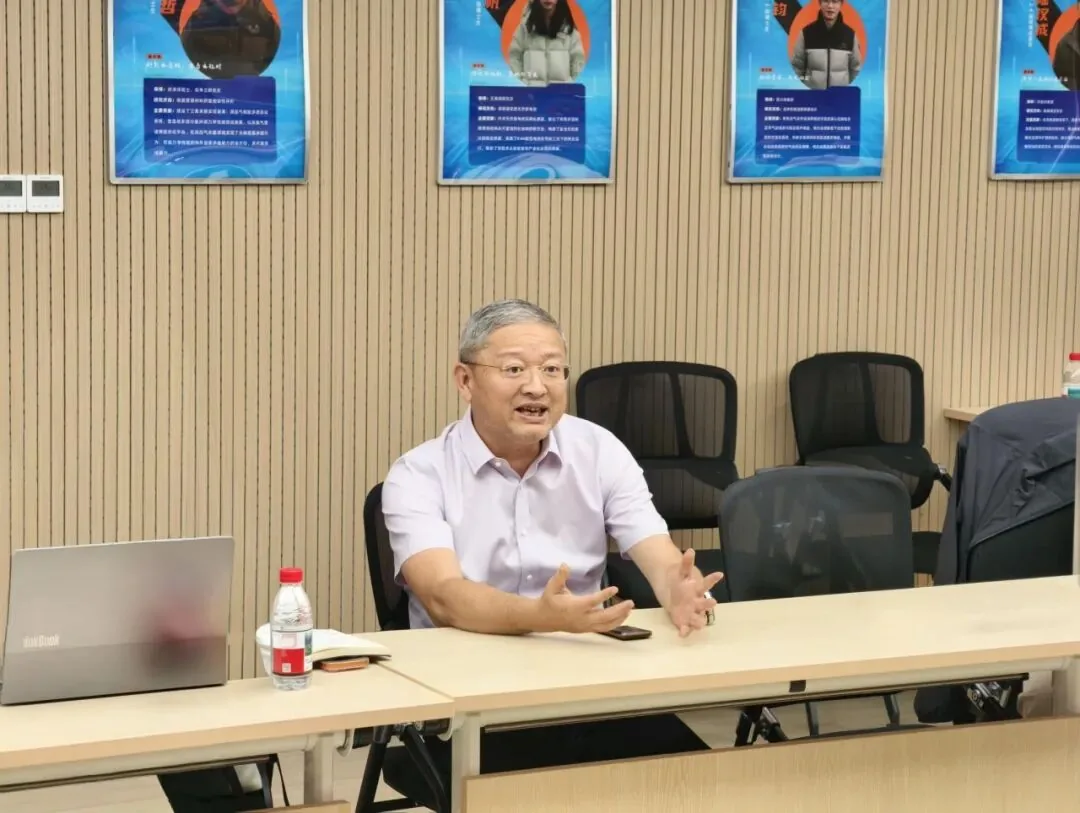
After the demonstration, the Zhejiang University experts raised a number of pointed questions about the technical approach to AI diagnosis.
One key question: since the equipment has years of accumulated design parameters and operating data, could data-driven models be used directly to predict performance and health?
Drawing on its field experience, Domex-E explained that data-driven methods work for predicting specific states, but real-world faults usually involve several interacting factors, and a single model struggles to reach an overall judgment under complex operating conditions.
Domex-Engine currently combines deterministic engineering calculations with AI-agent reasoning, bringing equipment design parameters, historical operating baselines, failure modes and a professional knowledge base into the analysis so that the AI can judge using the relationships between different measurement points.
Building on this approach, the Zhejiang University experts noted that compressor phenomena such as surge, shaft vibration, intercooling problems and performance degradation are already backed by mature physical theory and engineering principles. Bringing this mechanistic knowledge into AI analysis more effectively is an important way to improve diagnostic accuracy and explainability.
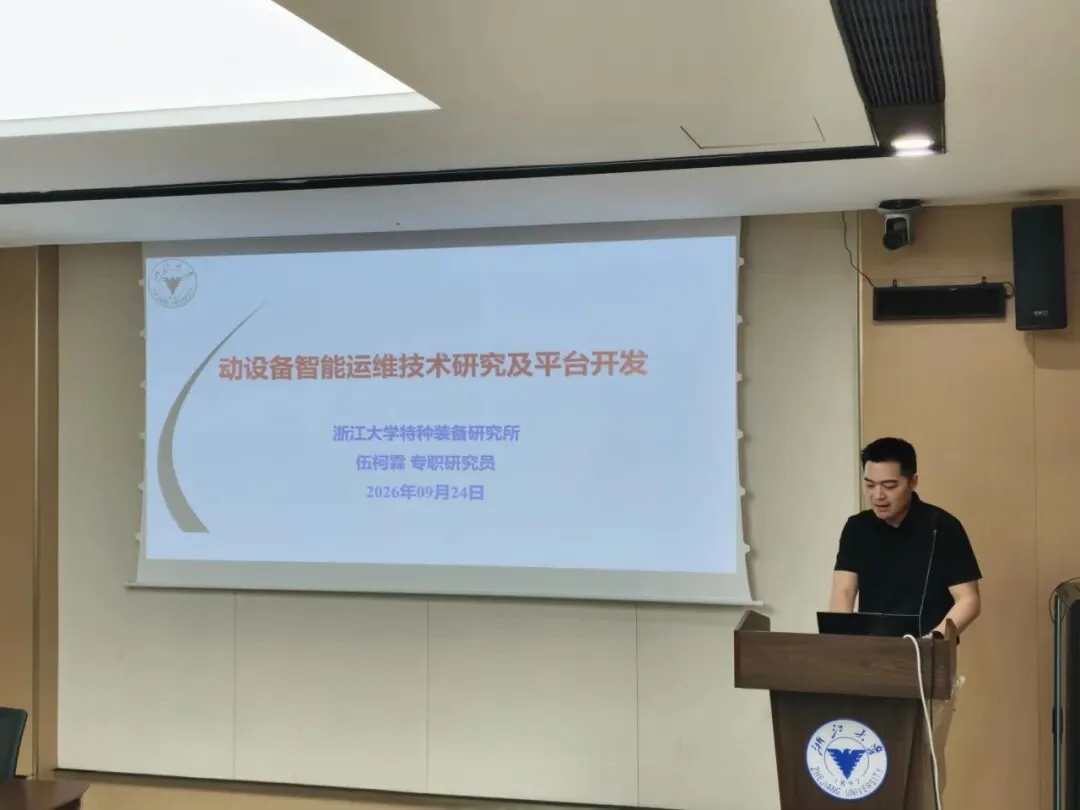
The two sides used the intercooler as an example. In operation, an intercooler's heat-exchange performance can decline over time because of long service, fouling and other factors, and the cold-end temperature approach gradually drifts from its design value. Identifying this degradation from design conditions, operating parameters and physical principles, and then judging when maintenance is needed, is both an application of traditional engineering experience and a capability AI diagnosis still needs to refine.
The discussion also turned to data quality on site. Sensor interference, signal spikes and complex changes in operating conditions can all trigger false alarms. Domex-E shared its experience of using AI to correlate multiple measurement points to tell real equipment anomalies from data-acquisition noise, and the Zhejiang University experts suggested further improvements from the perspectives of signal processing, physical constraints and diagnostic methods.
The focus of the discussion gradually shifted from “what AI can analyze” to “how AI can reach judgments that are credible, explainable and verifiable.”
From engineering practice to frontier research: exploring how the two can complement each other
During the exchange, the Zhejiang University research team presented its work on intelligent inspection of fluid machinery, acoustic and vibration signal analysis, fault mechanism research and intelligent diagnosis.
Vibration diagnosis was a particular focus.
Domex-E currently uses high-speed vibration data acquisition and edge computing to extract features such as spectra and shaft orbits, and combines them with a cloud-based AI agent for overall diagnosis.
The Zhejiang University team shared its research on moving physics-based fault diagnosis further toward the edge, combining specialized signal processing, diagnostic models and expert rules for more targeted fault identification, with cloud-based analysis then reasoning through complex problems.
The two sides also compared pumps and compressors in terms of fault signatures, measurement point layout and vibration analysis methods.
For industrial AI, real operating data and specialized mechanistic models offer different but complementary value. Domex-E's long experience in compressor engineering, its field operating data and real applications provide real problems and conditions for validation; Zhejiang University's research in fluid machinery theory, signal analysis and fault mechanisms offers new technical approaches for deeper and more reliable diagnosis.
Both sides expressed interest in continuing with focused exchanges on combining vibration signal processing, mechanistic models and intelligent diagnosis.
From intelligent diagnosis to system-level operating optimization
The exchange looked beyond today's applications of AI-based O&M to the economic value and future direction of industrial AI.
The Zhejiang University experts pointed out that the value of industrial AI must show up not only in diagnostic results; it also has to answer a more practical question: how can the economic benefit of intelligent diagnosis for industrial users be quantified?
For example, when AI flags a potential fault risk early, how much unplanned downtime loss does it actually prevent? And when equipment keeps running smoothly, how can the contribution of an intelligent O&M system be assessed objectively?
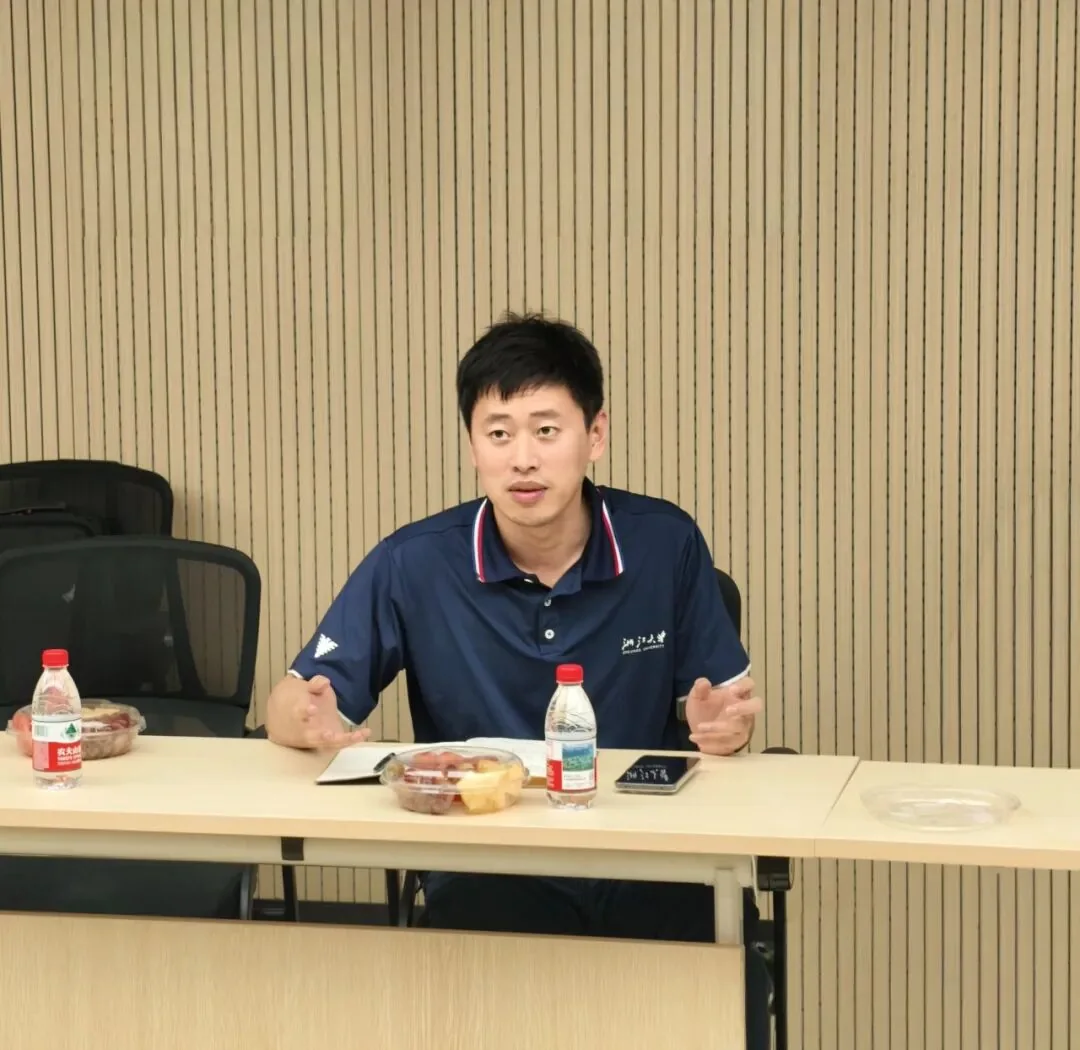
In response, Domex-E described its approach of combining AI diagnosis with spare-parts stocking and field service. By continuously analyzing equipment condition, identifying likely maintenance needs early and preparing parts and service resources accordingly, it aims to move from reactive repair toward more proactive, planned O&M.
The Zhejiang University experts offered further ideas on risk assessment and quantifying economic value, providing inspiration for combining intelligent O&M technology with service models.
The two sides also discussed the technical challenges of extending AI from equipment diagnosis to operating optimization.
In a large air separation unit, the compressor does not run in isolation: its load changes are closely tied to upstream and downstream processes. Achieving more efficient coordination between equipment and the overall system while ensuring safety and stability requires solving problems of system coupling, nonlinear changes in operating conditions and operating limits.
Domex-E shared its plans to explore system-level automatic load adjustment, and the two sides exchanged views on the technical difficulties and possible research paths.
From single machines to whole systems, and from condition monitoring to operating decisions, industrial AI applications are reaching deeper.
From technical exchange to joint exploration
The exchange with Zhejiang University was not only a presentation of results, but an in-depth discussion of real industrial problems.
From criteria for evaluating equipment health to combining physical mechanisms with AI models, and from accurately identifying vibration signals to the credibility and economic value of diagnostic results, the two sides looked at the current technical challenges of industrial AI from the complementary perspectives of engineering practice and academic research.
For Domex-E, the operating data, failure cases and engineering experience gained from long service in the field are an important foundation for intelligent O&M. For university researchers, the complex problems of real industrial settings point to new directions for theoretical research and technical innovation.
Further progress in industrial AI needs continued breakthroughs in algorithms and theory, and repeated validation in real industrial settings. How to turn engineering experience into reusable analytical capability, how to bring physical mechanisms and AI reasoning closer together, and how to make technical progress show up as reliable, economical equipment operation are the questions both sides share.
From data monitoring to intelligent diagnosis, and from engineering practice to frontier research, Domex-E will keep grounding its work in real industrial needs, exploring the integration of AI and turbomachinery technology, and working with universities and industry partners to keep improving intelligent O&M.
From data to judgment, from technical exploration to operating value.
Making every technical advance a force for safer, more stable and more efficient equipment operation.
First published in Chinese on the Domex-E WeChat official account (13 October 2026). Read the original