
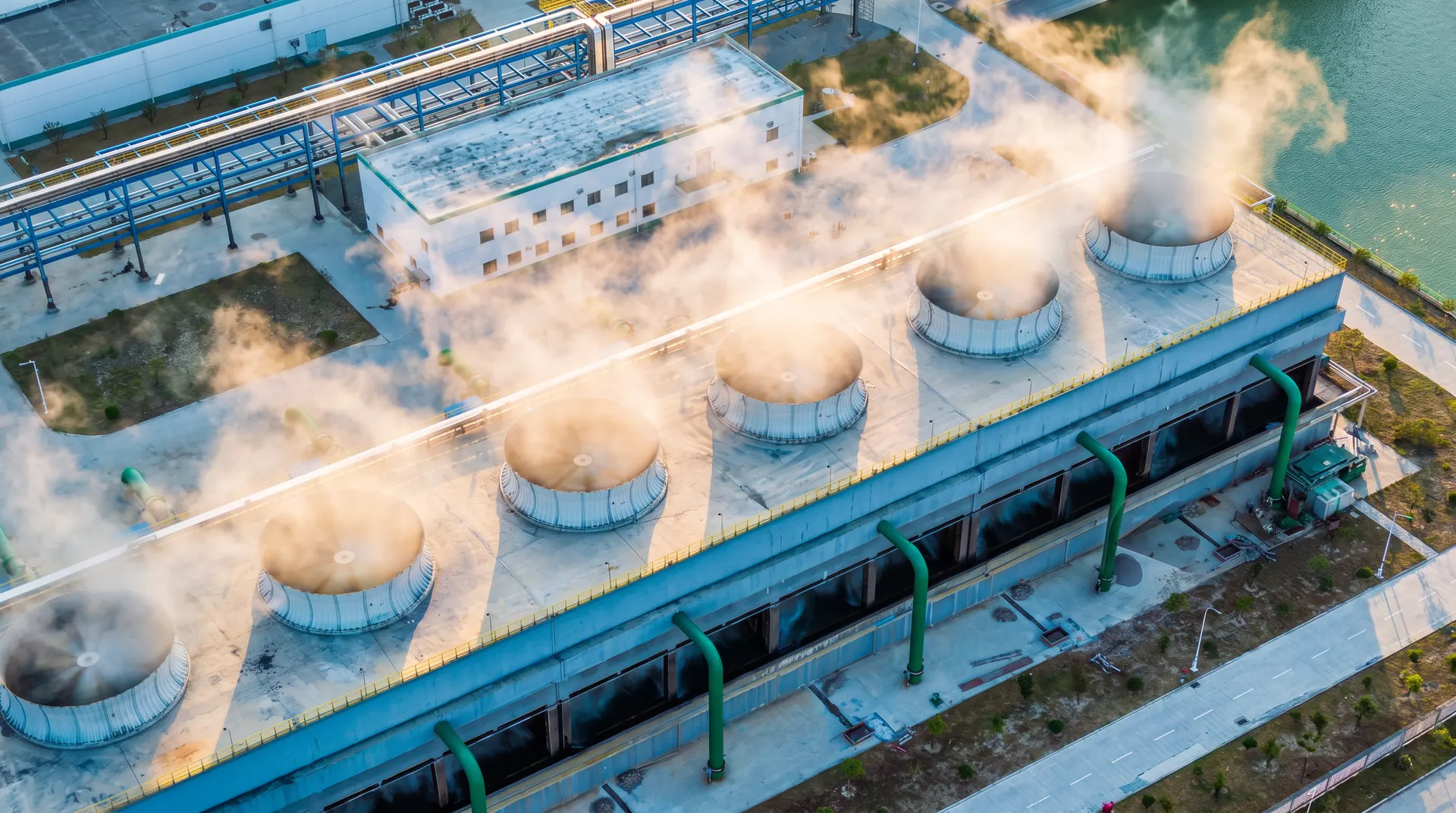
Normal operating readings do not mean a plant is already using energy as well as it can.
A conventional DCS and routine inspection will catch limit breaches and alarms. Some energy losses never show up that way. They sit in the relationship between readings.
Circulating-water flow can swing without control while the compressor motor load stays almost flat. Stage inlet temperatures can sit above design and move in step with cooling-water temperature. Neither, on its own, is necessarily a fault. Read together, they can point to savings the plant is not yet using.
On one air compressor at an air-separation plant, the Domex-Engine platform kept analysing compressor and cooling-system data and identified two opportunities. On the current operating data and the stated assumptions, the two together are worth about RMB 920,000 a year in electricity.
1. Water flow swings hard. Motor load barely moves.
Circulating water has to remove heat from the compressor. Flow has to meet the cooling duty, but more is not automatically better. Extra flow can raise pump power without a matching cooling benefit.
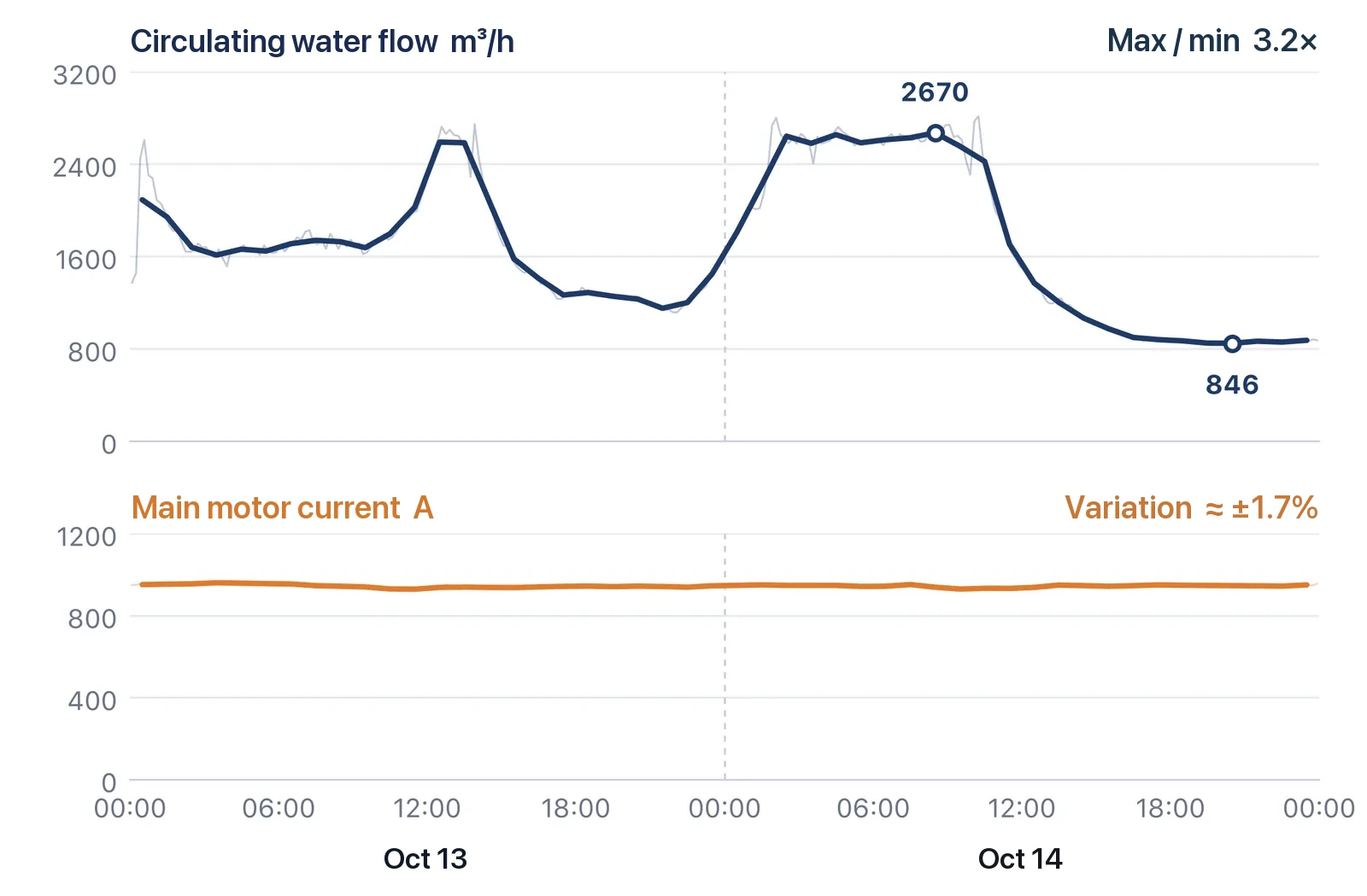
From 13 to 14 October, Domex-Engine saw hourly-average circulating-water flow move between 1,200 and 2,000 m³/h. Over the same hours, main-motor current stayed between 928 and 959 A.
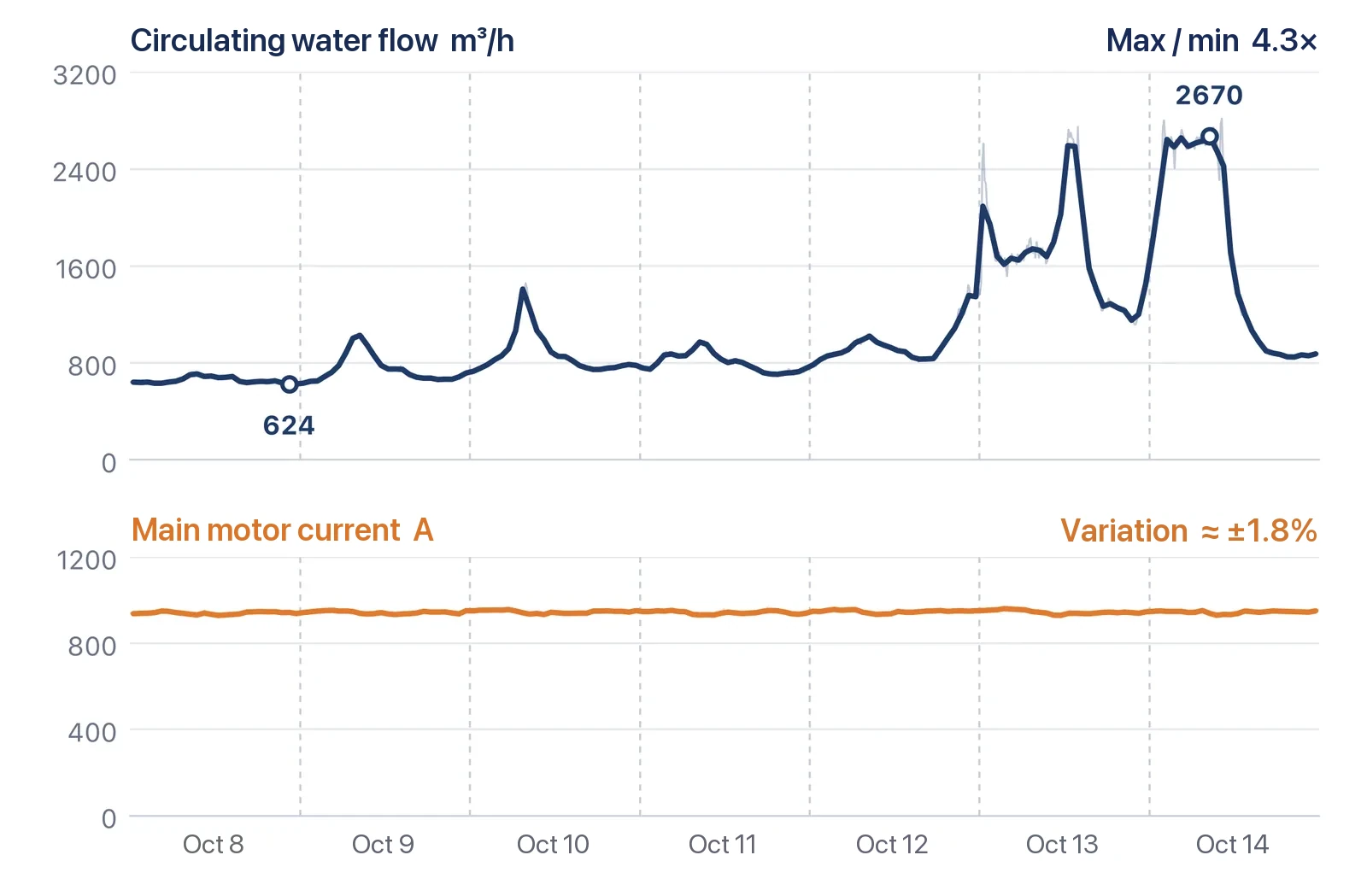
Across 8–14 October the flow range widened to 900–2,000 m³/h. Motor current stayed comparatively steady.
The two traces do not move together. Flow changes by a large margin; motor current does not. That is a reason to check whether today's water flow still matches the real cooling duty, and whether the water system has room to be tightened.
If site checks confirm that flow can come down without missing the cooling duty or the operating limits, pump power can come down with it.
Domex-Engine's estimate: a reduction of about 300 m³/h corresponds to about 87.8 kW of pump power. At 8,000 hours a year and RMB 0.6/kWh:
87.8 kW × 8,000 h × RMB 0.6/kWh ≈ RMB 421,000 a year
On the water system alone, that is about RMB 420,000 a year of potential savings.
2. Stage inlet temperatures are high, and they track the cooling water.
The second opportunity is at the second- and third-stage inlets.
Domex-Engine found both inlet temperatures sitting above design for a long stretch. The excess tracks cooling-water temperature and cooler performance. Improving how the cooling system is run is therefore a direct way to cut compressor power.
From 13 to 14 October, the second-stage inlet averaged about 33.0°C and the third-stage inlet about 31.9°C. Plotted against cooling-water inlet temperature, the three curves move together.
Between 07:00 and 15:00 on 14 October, cooling-water inlet temperature rose 6.0°C. The second-stage inlet rose 6.2°C and the third-stage inlet 4.2°C. At 22:00 that day the stage inlets were 35.0°C and 33.4°C, while cooling water was at 28.3°C.
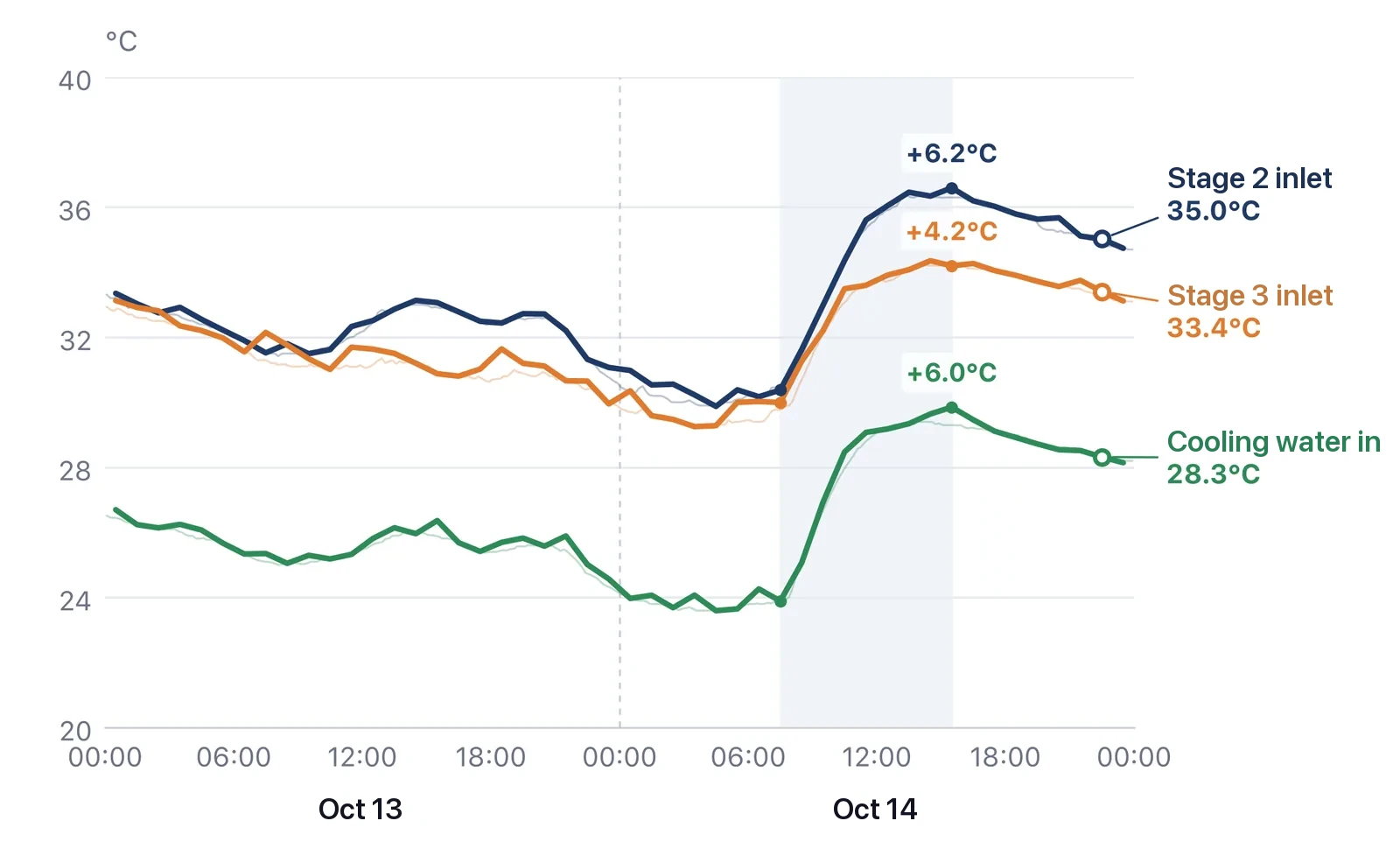
Set against the design point, the direction is specific: hold cooling-water inlet temperature and improve cooler heat transfer, bring both stage inlets back toward design, and take the cold-end temperature difference from about 6.6°C to within 5°C.
That improves interstage cooling and cuts the power of the compression that follows. The platform is not only flagging a high temperature. It ties the reading to the design case and names the part of the system to change, and the target to change it to.
Domex-Engine's estimate: each 1°C reduction at the second- and third-stage inlets is worth about 17.3 kW. A 3°C reduction at each inlet is about 103.6 kW.
At 8,000 hours a year and RMB 0.6/kWh:
103.6 kW × 8,000 h × RMB 0.6/kWh ≈ RMB 497,000 a year
If the plant can do that while still meeting the cooling duty, and if the measures hold up on site, cooling-water temperature and cooler performance are worth about RMB 497,000 a year.
3. Together, about RMB 920,000 a year
The two opportunities Domex-Engine identified on this cooling system:
| Opportunity | Estimated power | Annual electricity |
|---|---|---|
| Circulating-water flow | 87.8 kW | RMB 421,000 |
| Stage inlet temperature | 103.6 kW | RMB 497,000 |
| Total | 191.4 kW | RMB 919,000 |
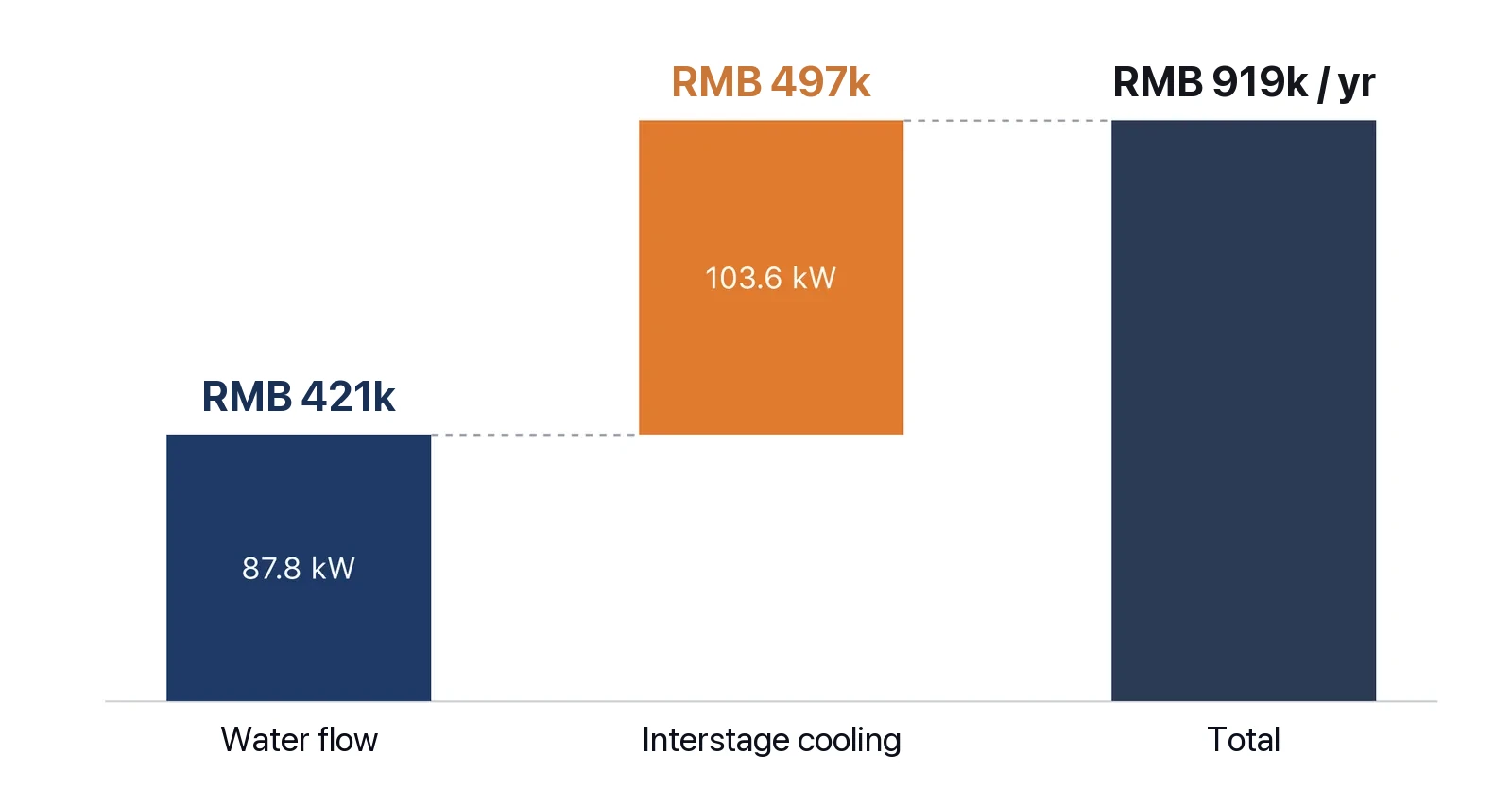
Both sit in the cooling system, but they save power in different places. The first cuts pump power. The second cuts compressor power by improving interstage cooling.
They should be counted separately, and any interaction between the two adjustments should be checked, so the same kilowatt-hour is not claimed twice.
The figure of about RMB 920,000 is an annualised estimate from current operating data and stated assumptions. It is not a saving already realised. The actual result still has to be checked against site cooling duty, machine condition and how the plant is run.
4. From a reading to an energy opportunity
What matters here is not that one reading went out of range. It is the relationship between readings.
Flow moving while motor current does not is a clue about pump power. Stage inlet temperature moving with cooling-water temperature is a clue about compressor efficiency.
Point alarms and single-tag trends leave those clues in different systems, where they are hard to read as one judgement.
Domex-Engine, including its agent capability, keeps collecting and relating the data, turns scattered tags into something an engineer can assess, and then puts a number on the possible saving against machine performance and operating conditions.
From spotting the issue, to naming what to change, to estimating what it is worth: this is operation moving from reacting to alarms toward acting on efficiency.
On a large plant that runs continuously, a local efficiency gain compounds. The opportunity is often already in the data the plant records every day.
Delivery of the machine is the start. Creating operating value after that is what Domex-E keeps working on.
Domex-E will keep combining compressor engineering with digital tools, so industrial users can see how a machine is actually running, find the room that is still there, and turn data into a saving that can be measured and checked.
Note: The customer is not named; the article refers only to an air-separation user. Charts are hourly averages from the Domex-Engine platform. The savings figures are estimates from the operating data and the stated assumptions. Actual results have to be verified on site.